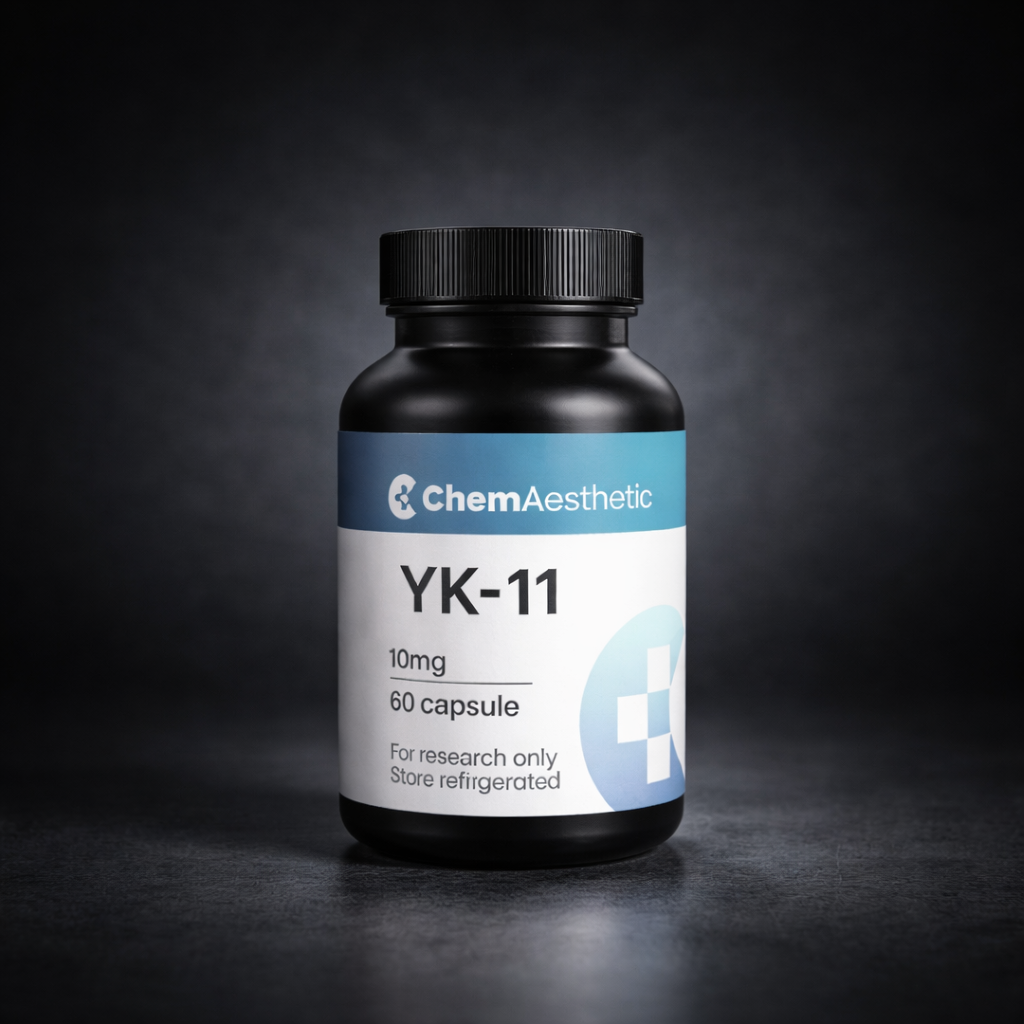
YK-11 is a high-interest research compound often discussed in scientific and performance-oriented circles for its potential relationship to androgen receptor activity and myostatin signalling. Frequently categorised alongside SARMs-like compounds (though its exact classification is often debated in informal contexts), YK-11 is typically referenced in research discussions focused on muscle biology, anabolic signalling pathways, and gene-expression markers associated with growth and recovery.
In simplified research terms, YK-11 is commonly described as interacting with the androgen receptor (AR), a key regulator in pathways linked to muscle protein synthesis and androgenic signalling. What makes YK-11 especially notable is that it is often mentioned in relation to myostatin, a naturally occurring protein that helps regulate and limit muscle growth. In preclinical and mechanistic discussions, researchers explore whether YK-11 may influence downstream proteins such as follistatin, which is associated with binding or modulating myostatin activity. Because of this, YK-11 frequently appears on research compound catalogues under themes like myostatin research, follistatin pathways, muscle differentiation markers, and androgen receptor modulation.
Due to the compound’s popularity and the variability that can exist in grey-market supply chains, sourcing standards matter. Researchers and labs typically look for suppliers that prioritise purity, identity confirmation, and batch consistency, ideally backed by third-party analytical testing (where available) such as HPLC or LC-MS. Clear packaging, accurate concentration labelling (if in solution), and robust quality control practices help support repeatability and reduce experimental noise—especially important for compounds studied in receptor binding models, cellular assays, or comparative signalling research.