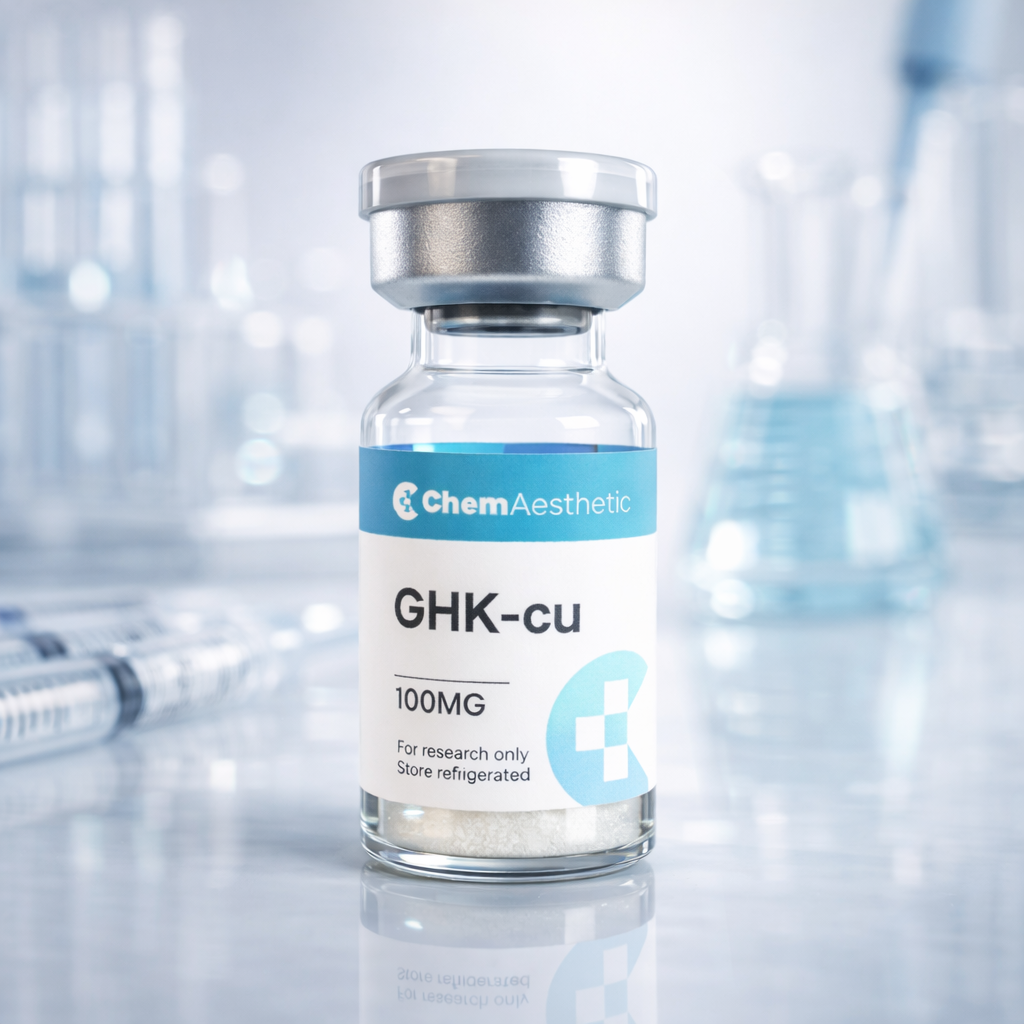
GHK-Cu (Copper Peptide)—often written as Copper Tripeptide-1
is a widely studied biomolecule in laboratory settings due to its role in skin biology, extracellular matrix signalling, and tissue repair pathways. Structurally, it’s a small tripeptide (GHK) that naturally binds copper (Cu), forming a complex that researchers investigate for its potential influence on cell communication, growth-factor signalling, and regenerative markers. Because GHK-Cu occurs in the body and appears in multiple research contexts, it has become one of the most recognised peptides in studies focused on skin quality, collagen-related pathways, and biomaterials compatibility.
In simplified research terms, GHK-Cu is frequently explored for how it may interact with processes linked to collagen and elastin organisation, glycosaminoglycans, and other components of the extracellular matrix (ECM). Researchers also examine its relationship with inflammatory signalling, oxidative stress markers, and broader “remodelling” pathways—particularly in models that simulate tissue renewal or controlled injury responses. This makes Copper Peptide a common topic in scientific conversations around dermal fibroblast activity, wound-healing models, and anti-ageing research frameworks (as a mechanistic area of study, not a product promise).
GHK-Cu is also widely referenced in research touching on hair follicle biology and scalp-related pathways, where investigators explore how peptide signalling and copper-associated processes may influence the local cellular environment. In cosmetic science and formulation research, Copper Tripeptide-1 is often studied for stability, compatibility with common bases, and how variables like pH and exposure to light/air can affect peptide integrity. For labs and product developers, consistency and documentation are key to running repeatable experiments and maintaining quality.
Because demand for GHK-Cu spans research and formulation development, sourcing standards matter. Many researchers look for batch-to-batch consistency, clear labelling, and third-party analytical testing where available (e.g., HPLC/LC-MS) to verify identity and purity. Proper packaging and storage guidance can be particularly relevant for peptides and peptide complexes, as stability can vary depending on the form (powder vs solution) and environmental conditions.